
Source
Introduction
For decades, the high-stakes game of hiring has been played on a two-dimensional field: the Curriculum Vitae. Recruiters and hiring managers have historically obsessed over "years of experience," prestigious job titles, and academic accolades. However, as the global economy enters a period of unprecedented volatility, the limitations of the CV have been laid bare. High turnover rates, plummeting engagement levels, and the staggering financial burden of "bad hires" suggest that what a person has done is no longer a reliable predictor of what they will do or how long they will stay.
The tide is shifting. We are entering the era of talent validation, where the "who" matters more than the "what." Psychometric data, once a niche psychological tool, has emerged as the new gold standard for retention. By leveraging AI-powered recruitment and psychometric profiling, forward-thinking organizations are moving beyond the surface to uncover the intrinsic motivators that keep a workforce stable, motivated, and resilient.This fundamental shift represents a move from reactive replacement to proactive talent optimization, allowing companies to build robust talent pipelines based on deep behavioral insights rather than superficial credentials.
The "Paper vs. Personality" Gap
Traditional hiring operates on the assumption that if a candidate has managed a team for five years, they are objectively a "good manager." This logic ignores the variables of environment, temperament, and cultural alignment. In a volatile economy, the cost of a bad hire can range from 30% to 150% of an employee's annual salary when factoring in recruitment costs, lost productivity, and the disruption of team morale.
When we hire based solely on experience, we often ignore the "personality-role fit." An individual may have the technical skill to perform a task but lack the emotional resilience or social orientation required for a specific company culture. This mismatch is the primary fuel for employee turnover. Psychometric data solves this by providing a scientific lens into a candidate's cognitive abilities, stress tolerance, and motivational blockages, data points that a polished CV simply cannot provide.Without these insights, HR leaders are essentially gambling with their organizational stability. Utilizing AI matching algorithms ensures that we bridge the gap between perceived capability and actual behavioral execution.
Psychometric Profiling: The Architecture of Retention
According to recent research, the alignment of psychometric insights with organizational goals transforms HR from a reactive department into a strategic powerhouse. Here is how psychometric data serves as a proactive retention tool:
1. Predicting the Job-Person Fit
Retention begins before the first day of work. By using psychometric testing during the AI-powered recruitment phase, organizations can identify candidates whose values and motivations align with the role. For example, a role requiring high adaptability in a fast-paced startup requires a different psychological profile than a compliance-heavy role in a government agency. When an employee’s personality matches their daily tasks, they experience higher job satisfaction and a lower likelihood of early disengagement.This predictive capability allows hiring managers to foresee potential friction points and address them immediately during onboarding, ensuring a rapid, seamless integration into the company framework.
2. Solving the Safety and Social Needs Gap
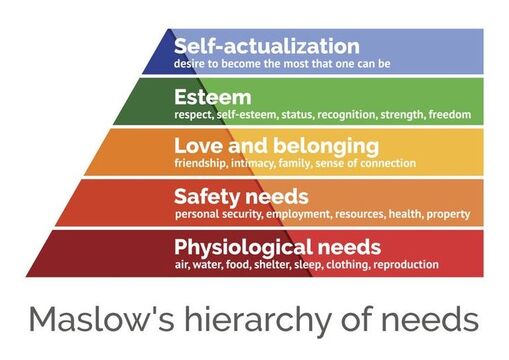
Drawing on Maslow’s Hierarchy of Needs, employees require psychological safety and a sense of belonging to remain committed. Psychometric tools measure emotional intelligence and social orientation. By understanding these traits, managers can build teams that promote trust and cooperation. They can match employees with managers whose leadership styles complement their working preferences. Furthermore, they can identify individuals vulnerable to burnout or conflict early, providing targeted support before they exit the organization. Addressing these core human needs dynamically transforms a group of individual workers into a highly cohesive, high-performing unit.
3. Personalizing the Employee Experience
One of the most profound benefits of psychometric data is the ability to "reimagine" the employee journey. Standardized career paths are a relic of the past. Modern retention strategies use psych profiles to customize development. Some employees are driven by public recognition and "social needs," while others are motivated by autonomy and "mastery." Psychometric insights allow employers to tailor feedback and rewards, ensuring that positive reinforcement resonates on an individual level.By individualizing the employee lifecycle, organizations prove they value their staff as unique contributors, thereby deeply cementing corporate loyalty and reducing the temptation of external offers.
Combating Disengagement in a Volatile Economy
Disengagement is a quiet killer of productivity. It often arises when employees feel misunderstood or mismatched with their teams. In a volatile market, where external stressors are high, the workplace must be a stabilizing force.
Fuzu has pioneered this shift by integrating talent validation into the hiring ecosystem. By using ongoing psychometric monitoring and AI-driven insights, employers can catch the "flicker" of disengagement before it becomes a flame of resignation. This involves:
- Role Realignment: Offering adjustments to a role to improve fit before dissatisfaction escalates.
- Latent Skill Identification: Using aptitude data to find hidden strengths, allowing employees to move cross-functionally rather than moving out of the company.
- Fairness and Transparency: Psychometric tools objectify the promotion process, reducing unconscious bias and fostering a culture of fairness, a key driver of long-term loyalty.
- Proactive Morale Management: HR teams can deploy targeted check-ins based on baseline psychometric data to continuously gauge morale and proactively intervene when highly analytical or empathetic team members show early signs of cognitive fatigue.
The Employer and Employee Win-Win
It is a misconception that psychometric testing only benefits the employer. For the employee, being hired or promoted based on psychometric data means they are placed in environments where they are more likely to thrive. It reduces "imposter syndrome" and ensures they are supported by a leadership style that fits their psychological makeup.
For the employer, the data provides a shield against the "high cost of bad hires." In an era where talent is the primary competitive advantage, the ability to maintain organizational knowledge through reduced turnover is invaluable.When both parties clearly understand the psychological contract of their working relationship, the foundation for self-made success is solidified. The company saves capital on operational drag, while the professional experiences genuine progress through hard work.
Conclusion
The transition from "Years of Experience" to "Personality-Role Fit" is not just a trend; it is a necessary evolution. As we have seen, psychometric testing, when integrated with thoughtful HR practices, equips organizations to systematically address complex workforce challenges. It bridges the gap between a candidate's potential and an organization's expectations.
By embracing AI-powered recruitment and psychometric profiling, Fuzu is helping partners move from "Idea to Impact." In a world where the only constant is change, data-driven talent validation is the anchor that keeps your best people on board. The gold standard is no longer what is written on the paper, but what is ingrained in the person.
Retention is no longer a mystery to be solved; it is a science to be applied. It’s time to look beyond the CV.Embrace the data, genuinely understand your people, and empower your organization to scale with confidence.