

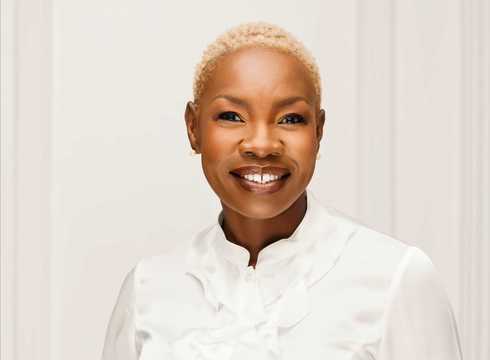
This is my second chat with Dorothy. She’s refreshing and has a great sense of humor. We’re already laughing a bit too much and have to calmly remind ourselves to start the interview. She’s the kind of person that leans in and maintains eye contact when speaking to you. Her words are filled with wisdom and I find myself nudging her to write a book one day because this should be preserved for generations to come. Grab a cup of tea or coffee, I know you’ll enjoy this one.
What does the principle of mindfulness mean to you and what drives your passion for it?
Wow, this has to be the best question ever. Mindfulness for me changed the way I view life. The father of modern mindfulness, Dr. Jon Kabat-Zinn defines mindfulness as paying attention in a particular way, on purpose, in the present moment, and non-judgmentally. Mindfulness teaches us to take things with equanimity, where you take things as they are, without judging, without thinking about the past or the future - just being in the now.
How has the principle of mindfulness influenced your work?
At Google, there is a program called Search Inside Yourself. It was founded on the premise that Google can give you any answer you type into the search box but Google can’t tell you who you are. To find out who you are, you have to search inside yourself and that’s where the present moment and the quiet times and the stillness comes in. The course is quite popular at Google. I’ve been teaching the Search Inside Yourself class at Google for 8 years now.
In our lives, we are always just busy people - multitasking. We are never really fully present. Mindfulness enhances your emotional intelligence (EQ). Improving your EQ makes you a better leader. You’re able to be self-aware, to feel with other people (empathy), you’re able to manage your own emotions (self-regulate), and to offer compassion to others when they need it.
You’ve spent a big part of your career in Communications. Do you think you’re a good communicator?
Hm, I wish I was a good communicator, I don’t think so, (laughs). Saying that one is a good communicator really is a claim because communication means that I talk and you’re able to understand. But I have learned that sometimes when you say things, people read it in a different way. Our intentions can be very clear but the person receiving the communication could see it through a filtered lens of the past and that’s what makes communication very difficult. I like seeing people’s faces when I’m talking because I think a lot cannot be lost in translation, especially through a text message. For example, I could send someone a message at work saying, “Can you look at this?”, but they could be reading it as, “CAN YOU LOOK AT THIS!”. And this distorts everything. It’s always better to ask questions such as, “What did you mean when you said this?” or “If I understand correctly, what you’re saying is….”.
Our backgrounds, cultures, and experiences shape who we are. They influence how we communicate and how we interpret words and messages. I believe we’re all learning. I’ve got a manager, Paul, who says, “You must give people the benefit of the doubt that they come from a good place.” With this in mind, it means that I can be kind when I feel that someone isn’t communicating in a way that they should. I can extend grace.
Tell us about a time you led a project that seemed impossible to accomplish
Having Value Added Tax (VAT) removed on mobile phones in Kenya in 2008. Now that was a big win. I was working at Nokia at the time and we didn’t have a policy person for East and Central Africa, which is the market that I was working in at the time. We knew at Nokia that smartphones were the “computers” for Africa. If someone had a mobile phone, then that would be their interaction with the internet. The cost of smartphones was prohibitive. When the smartphones landed, we saw how much they were costing and so I thought, why don’t we lobby in Cameroon, Tanzania, Kenya, and Uganda, and have VAT removed to make them more affordable and increase internet penetration. I remember people wondering why I wanted to do it given that my job is in Communications. I was discouraged by some colleagues and told that I didn’t even have experience in policy. But I really believed that smartphones too could be zero-rated.
My friend Rose introduced me to the Head of Microsoft, Louis Otieno, who had lobbied for zero-rating of laptops. I approached him and I must say he was very helpful. This is why it’s important to maintain quality networks - most of the problems we face, someone already has the solution and all you need to do is reach out to them. I knew that the Permanent Secretary for Information and Communication (2005 - 2013), Dr. Bitange Ndemo valued technology and so I reached out to him and shared my proposal. He advised that I rally the media to get more attention from the public and other stakeholders. Dr. Ndemo was monumental in supporting the proposal. With the support of my country director, we worked with other phone manufacturers such as LG to join us in the lobbying and it was covered passionately in the media.
In June 2008 when the Minister of Finance, who at the time was our President H.E. Uhuru Kenyatta, read the budget, we all tuned in and listened carefully. Finally, he announced the zero-rating of mobile phones in Kenya. Oh my, it was such an incredible win. 6 months later, we saw a huge uptake in smartphones as they were now affordable to Kenyans.
What would you say is the role of employers in amplifying women’s spaces and promoting their inclusion in leadership positions?
I have to say that I’m lucky that I work at Google. Google really does believe in diversity and inclusion. Companies should provide systems that encourage employees to bring their whole self to work by creating company cultures that encourage and promote diversity and inclusion in the workplace. It’s also about including everyone irrespective of their gender, age, religion, race, community, sexual orientation, or disability, and creating spaces for everyone to thrive.
What’s a leadership lesson that you’ve learned that’s unique to being a female leader?
I was talking to a school that was graduating on Saturday and I told them that the best leadership lesson I have learned is to use your voice. Your voice is powerful. Speak up when you need to. In our African culture, we can tend to be very diffident. For example, if someone senior to you at work shares an opinion you don’t conform to, you don’t speak up. And this leads you to become passive-aggressive. You’ll be surprised at the power of your voice.
I love this quote by Colin Powell which says, “Anytime you tolerate mediocrity in others, it increases your mediocrity. An important attribute in successful people is their impatience with negative thinking and negative acting people.” Don’t tolerate mediocre behavior as a leader. I think we could do with a bit of saying no to the mediocre things in our life. For example, if you know you’re going to be late for a meeting, send a message or call the other person. It’s just courteous. These are some of the leadership lessons that I’ve learned.
What impact are you making in Africa through your work and what should we look out for?
The Superheroes of Kenya Project. This is something that really excites me. It’s a Kenyan superhero display of the country’s pre-independence legends from each of the 44 tribes who fought for their communities’ land, freedom, and spiritual well-being; and are revered by their communities to date. You’ll read about famous superheroes such as Mekatilili, and Lwanda Magere, or Chala and Moraa that you may not know. We are still working on it because we want to see how we can make it available for children to read along.
For me, it’s exciting because it’s a legacy we leave for generations to come. We have a rich culture and a rich source of history that should make us proud. The Google Arts and Culture Project is a way of digitally preserving our history and culture. I’m passionate about it because we get to tell our African stories.
What’s the best part about working for Google?
(Laughs) I really miss the meals Ivy. Breakfast, lunch, snacks, and dinner were served at the office (we’re currently working from home). I never had to cook at my house because all these things were provided at the office. We have massages available for when you’re tired and a gym too so you can work out. Yeah, we’re spoiled.
You’ve had a pretty impressive professional journey, working with organizations like Nokia, USIU, and Google. Is there anything you wish you would have done differently?
I don’t think so. I am a firm believer that everything you do builds you for the next step of your journey. Our role is to be the best where we are at. Let your work speak for itself. I knew for example while I was at USIU that I wouldn’t teach forever. I knew I would leave at some point and travel the world and experience different things.
Do the best where you are at. Life is not a rehearsal. Wherever you are, be nice, treat people with decency and kindness because you don’t know who’s watching.
Tell us something very few people know about you
That I’m a great cook and I love cooking. I’m a foodie - I don’t do well with terrible food. Cooking is such a thrill for me. I also make the best dawa. I think I’d give Carnivore a run for its money. I’ve got a secret recipe (laughs)
At this point, I reveal to Dorothy that I too I’m an expert dawa chef and she challenges me to a “dawa face-off” and we continue to plan this meet-up that will determine who makes the best dawa. I’ll come back here to update you when the judges give their verdict.


