


The leadership landscape in Africa and the world is shifting. Millennials managers are changing leadership as we used to know it with their different and disruptive leadership styles. They are not afraid to break the barriers of normalcy and challenge the status quo with how they lead and manage their teams.
We interviewed a few millennial managers to see how they’re moving away from the older generation's leadership style. These are the responses we got.
Muthoni Mathenge, Head of Account Excellence at Fuzu
What department do you head?
My name is Muthoni Mathenge, I head the Account Excellence team at Fuzu. This is the B2B customer success arm that ensures all our employers who come onto the platform get value from the platform by getting quality hires.
How would you define your leadership style?
I've never thought about a definition and so I don't have a word for it. I fundamentally believe that everyone I hire can do the job, albeit with a little coaching and a little learning. So I give them the space, the thought partnership and the training they need to do it. Some need a bit more of each, but it also depends on seniority.
If you're entry-level you may need more training while experienced hires may only need thought partnership, especially when they get stuck. For senior roles, you'll probably need a bit of coaching as to what your blind spots are and then the space to do the work. Is there a definition for this?
Having observed other older leaders, how do you aim to lead differently, or how are you already doing it differently?
I have worked with older leaders all my life. I’ve also worked with a younger team for much of my career. The generation before us believe in the hustle culture; we need to get it done regardless of the cost to us as people. To be fair, they derive a lot of satisfaction and identity from their work, even naming themselves after their work. Their leadership style in my experience has been 'No excuses allowed,' often expecting you to work through sickness, a breakup, a family emergency, you name it. They believe in resilience and grit, tough love and 'don't take it personally, it’s just work'. This has its disadvantages and I picked up a lot from those experiences.
My generation looks within for its identity, not from what we do or what roles we play. We value accomplishment and impact, we look for work that aligns with our values and what we want to achieve in life. Work for us is not life or death (I don't think it was in previous generations either) and so we don't see why a person should suffer in the pursuit of work. We want to feel valued and appreciated, we want to be heard and involved. And so, I believe in balance.
I aim to lead as a human being, not as a robot. I am very intentional to investigate the mental state of my team when we meet to the best of my ability and act accordingly. If I hear a lot of signs of burnout or weariness, I ask the person to take leave and do something nice for themselves. I hope to display my vulnerabilities, especially during my one-on-ones with the team. This means sharing what I’m struggling with and what my wins have been that week.
I seek to create an open feedback culture that allows the team to share what they're unhappy about, and what change they'd like to see. Moreover, I don't hoard tasks that could lead to the development of their career and instead allow them to try and learn.
Lastly, thrive on clarity, ownership and responsibility: this is your task, these are the deliverables, this is why it’s important and this is when it's due.
I’m very young in my leadership journey, so I still have way more to learn. The generation after us has a lot more to teach us about being leaders. I hope to learn more as I go.
Elvis Salano, Executive Officer at Amnesty International
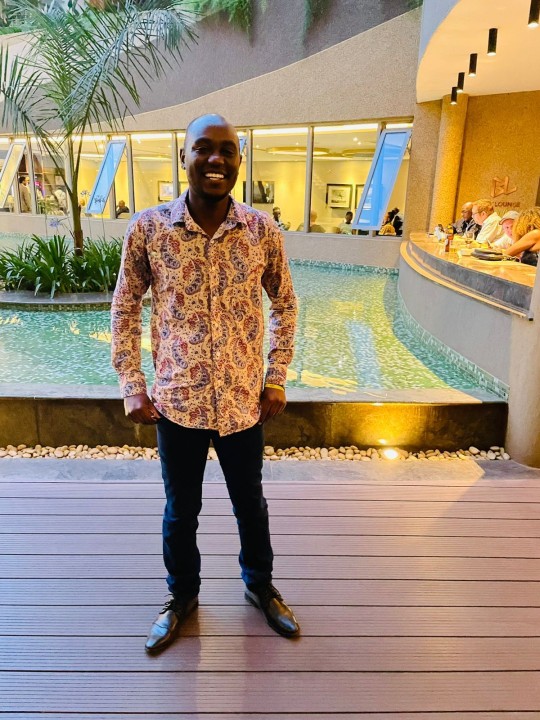
What is your leadership style?
I believe in transformational leadership. This means pushing my colleagues and team members beyond their comfort zone and to aim higher. I speak candidly and accept both affirming and critical feedback. The idea of top-bottom leadership is no longer effective. While I remain firm when I need to be, that firmness is out of consultations on common objectives.
How are you doing it differently compared to older managers?
Well, I have a lot to learn from more experienced managers. I don't see it as doing anything different, I am just focused on perfecting my style.
Abel Waweru, Entrepreneur

As a millennial manager, what is your leadership style?
I would like to define my leadership style as a mixture of servant leadership and mindful coaching. I look to embody excellence, empathy, and empowerment. Servant leadership, in my understanding, refers to a form of leadership that not only leads from the front but also looks to serve my team.
Mindful coaching is a form of leadership that looks to develop the people I lead. This means that I have to understand how each works, their respective strengths and weaknesses, and coach them on how to make the most out of both.
I am able to achieve this through:
-
Empathy - putting myself in their shoes in order to understand who they are, what's happening around them, and how that affects their lives.
-
Empowerment - once I identify areas they are skilled or gifted in, I encourage them to perfect the said gifts or skills because that is their unique ability.
-
Excellence - this, to me, is executing one's responsibility to the highest of standards; excellence is something that I teach my team to embody because while wisdom is in words and thought, excellence is in actions and deeds.
What is your inspiration and how are you doing leadership differently?
Coaches- I have different people who coach me and whom I emulate. These are people who are excellent in various areas of their lives. These are financial coaches, purpose/ calling coaches, relationship coaches, health coaches etc.
King Solomon - I think he’s one of the most influential persons to ever exist on this planet-how he lived, his wisdom, his understanding
Walk of Faith - I honestly can't attribute my lifestyle and thoughtfulness to anything other than God. Through my walk of faith, I have been able to receive the gift of knowledge and understanding, which enables me to view life in a different way. His word is like a manual and a cheat sheet on how to live an exemplary life.
Investment - I always look to invest in myself through books, content, podcasts, audiobooks, and anything that adds value to me. Currently, we live in the information age, and we don't have any excuse as to why we don’t invest in knowledge.
Meditation - We have downplayed mindful thinking as a skill in our generation because of instant gratification. But when you sit down and shut off the world to process what you know, you will realise that the power of the mind is beautiful. You will tap into mental faucets that have been dormant because of the microwave phenomenon, where everything is already done for us. To be honest, I enjoy meditation.
Steve Suchi, Director of Marketing and Admissions at Moringa School
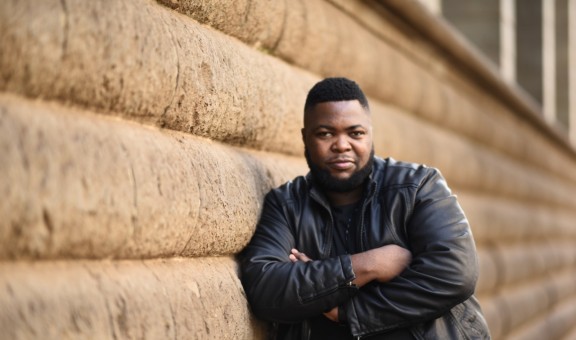
I currently work for Moringa School as Director-Marketing and Admissions, I am also part of the Executive Committee of the company. I consider myself a leader who is transformational, participative, and one who delegates. Having observed older leaders, I have purposed to motivate my teams and ensure that I allow them the space and altitude to make decisions. That way, they feel trusted. They also feel like they own a stake in the business and are confident to fail fast, learn quickly, iterate and grow.
What can we say about millennial managers and their leadership style?
Millennial leaders are not afraid to fail. This helps them give their juniors the leeway to make mistakes and learn from them. They don’t claim to know it all, which pushes them to have an insatiable hunger for growth and progress. One more thing that has prominently featured is that they’re goal-driven and target oriented. But even with that in mind, they feel for their team members and carry them along as they head to the proverbial promised land.